6 ways to pass though airport security with the least amount of delay

It is often a bottle-neck in airports and nobody enjoys having to travel through it – airport security – but we all have to do it. Here are half-a-dozen tips to make that experience as fast and as smooth as possible.
- Fast Track
There is little more disheartening than excitedly arriving at the airport only to find a queue of people snaking its way up a staircase and through the airport on the way to security. Even if you have arrived in plenty time to deal with a bottle-neck at passport control and security, the idea of standing for what may feel like forever, can put a dampener on everyone’s spirits.
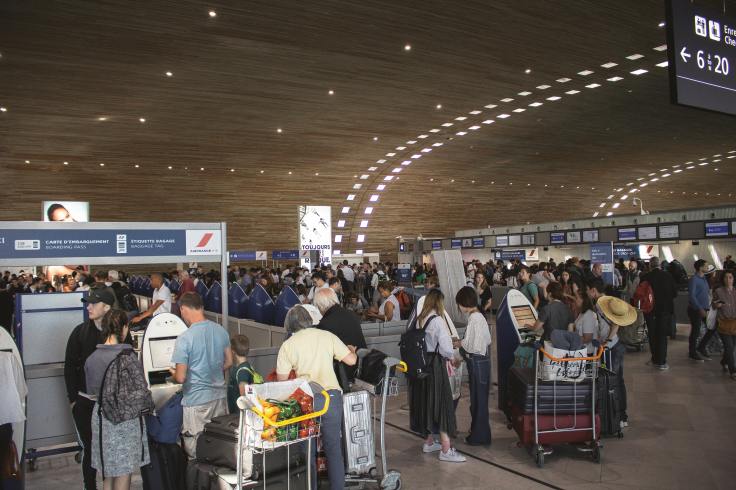
There is, however, a simple and inexpensive way to by-pass the queue- and that is Fast Track. Costing less than £10 and often bundled in with extra baggage on budget airlines when buying tickets, or an option to buy when booking airport parking, or on the website of the airport you are flying from (and some can be booked on-site using QR codes in the airport building), this is one ‘luxury’ that is worth the money.
There is a certain smugness that you feel when breezing past the huge queue to get to security – and you are on holiday, you are allowed to fell smug. I have enjoyed this feeling in the past – but I have also arrived at security when there are no queues at all.
Fast Track often has a separate staircase to access the level that security is on, and is then roped off along the same passageway as the non-Fast Track passengers. Make sure you have your Fast Track ticket quick to hand – or open on your phone (it may be part of your airline ticket) as well as your passport and any other documentation that you may need to access security.
Many airports have a ‘family lane’ for those travelling with young children – so check on the airport’s website to see if this is an option for you. It is worth noting that Fast Track only gets you past the queue TO security, not actually THROUGH security any faster. And you may also be wondering why everyone doesn’t do this – I also wonder this.
2. DON’T Wear Metal but DO Wear Easy to Remove Shoes.
Getting yourself through security checks quickly and with as little delay as possible is as important as getting your bags through quickly. Not only will following these steps get YOU through quickly, it will assist the security officers too.
Before heading to the airport, remove everything from your body that may set off the scanners. If you normally wear a lot of jewellery, it might be better to leave that at home, or take in your bag for the flight.
It is best to be prepared for what will be expected of you at security – you will need to remove your jacket, your belt, any electronics, and anything containing liquids and place them in the trays provided. Also empty your pockets of EVERYTHING!

Modern scanners at airports pick up more than just metal – they look for weapons, explosives, liquids, sharp objects, pills, as well as any other objects that may be hidden on a person’s body.
When you walk through the scanner, you should have nothing in your pockets, including medication such as inhalers, and you should remove your watch. You won’t be wearing your jacket or belt and so your aim should be to walk through the scanner wearing as little as possible – if you know what I mean! Oo-er, missus!
You may be asked to remove your shoes, so you want to wear a pair that are quick and easy to remove and put back on again. But you can reduce the chance of this happening at all by wearing simple tennis shoes, there is less chance of being asked to remove these – and they are also much more comfortable for travelling in. Avoid wearing shoes with steel tips or toe-caps, with metal buckles or zips, or metal nails or segs, or anything out of the ordinary – particularly boots.
3. Medicines
If you need to either take medicines regularly, including during your flight, or if you have a medical condition such as anaphylaxis, you should keep these items separate, in their own container or bag along with either a doctor’s letter or paper prescription.
Specifically mention these to the security officer. They will have a procedure to check these through security which may include a supervisor or manager. This shouldn’t really add any time to clearing through the security desks – but WILL do if they aren’t kept separate with documentation and highlighted to security staff.
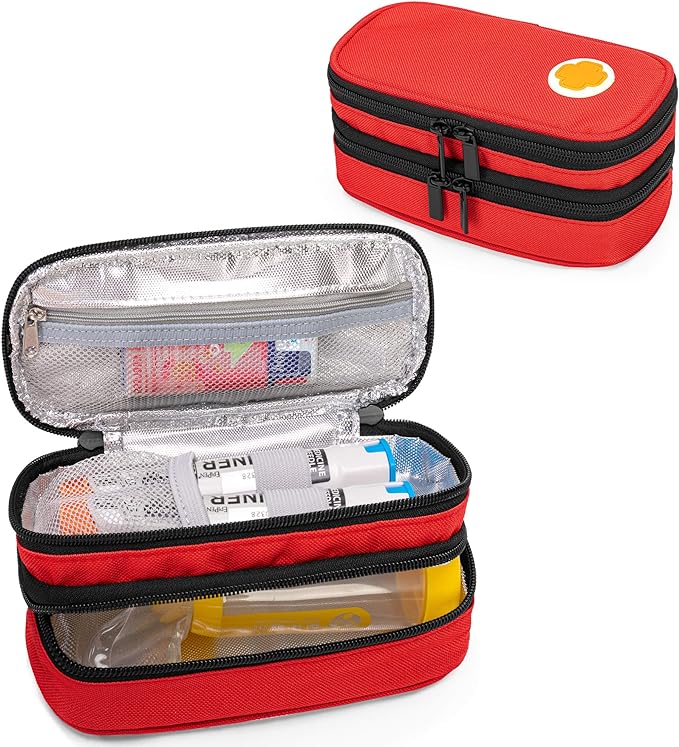
The bags don’t have to be marked as containing medical supplies, but this makes everything obvious.
Ice packs are allowed in the hold-luggage, but contact the airline in advance about hand luggage. Contact your airline or oxygen cylinders for both hand luggage and hold luggage.
Baby food, baby milk, and formula are allowed (except frozen breast milk in hand luggage) in containers up to 2000ml when a baby is also present. These should also be highlighted to security staff and in its own bag (which it probably already is).
For more information about travelling from UK airports – https://www.gov.uk/hand-luggage-restrictions/essential-medicines-and-medical-equipment
And from EU airports – https://europa.eu/youreurope/citizens/travel/security-and-emergencies/airport-airline-security/faq/index_en.htm
And from US airports – https://www.tsa.gov/travel/frequently-asked-questions/i-am-traveling-medication-are-there-any-requirements-i-should-be
4. Good Manners
This is an essential aspect of travelling in general, but it really matters most in security sensitive areas such as airports.
The security officers have a difficult, potentially dangerous, and often boring job. They are highly trained and know WAY more about what is allowed and what is not than you, so never argue with them!

They are there to keep you and your fellow travellers safe, and as such, should be treated with the respect they deserve. They are also people – and just with all walks of life, there are those who are helpful and happy, and those who are grumpy and officious. But what-ever type of person the security officer you are dealing with is, be patient, polite, and gracious. Follow their instructions – but do ask for clarification if you don’t understand – it is better to do something right first time.
You may be taken to one side for a reason you do not understand where extra security checks are carried out. Don’t be alarmed by this – it is entirely normal. There may be quotas to be met – a certain number of travellers each day where extra checks are made, or it might just be that the boss has turned up – but whatever the reason, do as you are asked with a smile. Don’t worry that the rest of the people travelling with you have breezed through – they won’t leave without you.
Extra checks can be the removal of shoes, further hand-held detectors for metal and other substances being used, and wipes on your hands for detecting chemicals. Be patient and just do as you are asked – including answering any questions.
You don’t want to stand out. Good manners also includes being sensitive to social norms in that country – this may mean that as a woman you will need to wear clothing that covers your arms and legs. Be aware of wording or slogans or images on your clothing – something which may seem innocuous to you, may be politically or religiously sensitive in that nation. DO NOT wear clothing emblazoned with political statements, no matter how much you believe in them.
5. Liquids, Electronics, and the Jacket Trick
Get your hand luggage ready for security before you even leave for the airport. First of all, make sure your bag is empty before you start packing – you don’t want to be explaining your camping knife that you forgot about to security staff.

All liquids – including jam type food stuffs (which must be sealed), pastes, and cosmetics – must be 100ml or under and add up to no more than 1 litre all together. These must be in a clear plastic bag for travelling through security – you can sort them into bog bags and make-up bags once you arrive at your destination.
Large electronic items, such as tablets and laptops, must be placed – uncovered – separately into a tray too. Make sure the electronics and your clear plastic bag full of liquids are easily accessible from your bag.
The Jacket Trick. You have to empty your pockets before walking through the scanners, so put everything you don’t immediately need – but want quick access to once you are out of security – into the pockets of your jacket. That is, money, watch, inhaler, jewellery, phone, etc. Once you have walked through the scanner and you are grabbing your stuff from the trays, you know most of your valuables are in your jacket, and you are not scrambling around at the bottom of the tray, lifting out coins and keys.
6. Documentation and Restrictions
This may sound obvious, but just in case you are unsure – you need a passport to travel internationally – and you need photographic ID to travel on domestic flights. You may also need a visa (not the credit card) to enter some nations and territories. And in some circumstances, a medical certificate to prove vaccinations.
Having a valid passport may not be enough! For all destinations, your passport must not run out while on you are there. For some destinations, your passport may have to have a certain number of months left on your passport – and it is IMPORTANT to remember that this is calculated from the issue date NOT the ‘valid until’ date (some counties passport authorities – such as the UK – add on the unused months of a replacement passport).

ETIAS – the EU visa – will come into force later in 2024 for non-EU citizens and will require application BEFORE travelling and will cost EUR 7. This can be done on the ETIAS website or mobile app – full information can be found HERE. It is also worth noting that the EES system will also be in effect in the EU in 2024 which is doing away with manual stamping of passports and will involve submitting biometric details at your port of entry – facial recognition details and electronically scanned finger-prints.
Whatever is needed, make sure you have your travel documents – including boarding passes on your phone, certificates, and passport open at the page containing your details, ready as you approach the passport control desk at airport security. This is normally situated just before the hand luggage checks.
There may be a cursory check, or it may be a more detailed operation – but either way DO NOT MOVE onto the next part of airport security until you have been handed back your documents and you are given permission to do so.
AND FINALLY – I’m not sure if I need to say this or not but I’m going to anyway…
DO NOT take anything illegal through an airport!
Even if something is legal in both your country of origin AND your destination, it may not be legal to carry on the aircraft.
You may think that you SHOULD be allowed to take your weed through customs because it is legal in your country of origin. But think again.

Don’t try to smuggle something through that might cause alarm – such as a cigarette lighter shaped like a hand grenade. Or something which may be against local laws, like archaeological artefacts – these can carry heavy prison sentences and fines. Just don’t do it.
DO NOT JOKE about bombs, guns, being a terrorist, hijacking, drugs or anything else you might immediately regret as you are hauled off in handcuffs for an unexpected stay in a foreign prison and an expensive fine.



 Betravelled